

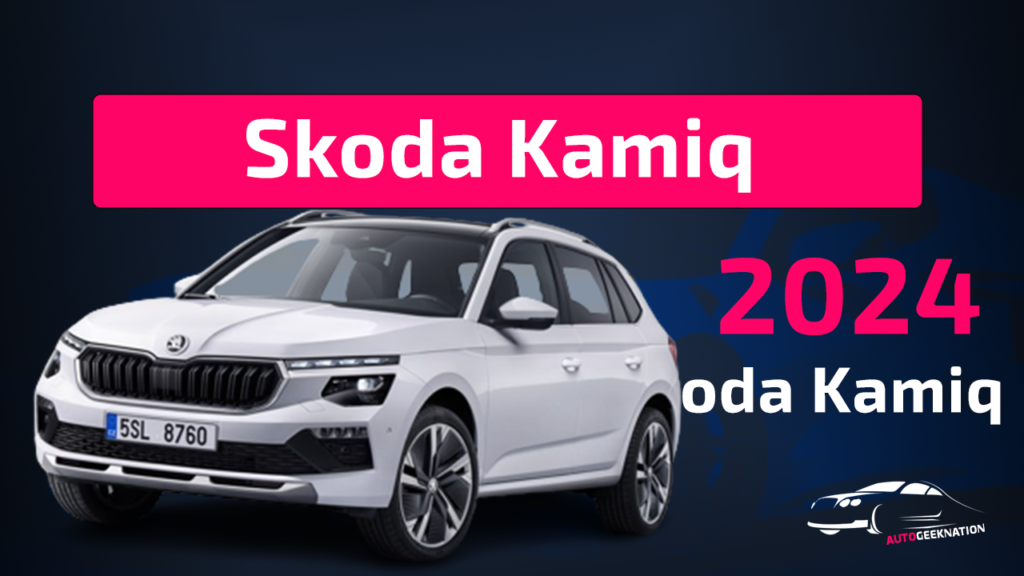
The 2024 Škoda Kamiq received a substantial facelift aimed at improving one of Škoda’s most important compact SUVs without changing its basic formula. Instead of introducing an entirely new generation, Škoda concentrated on the areas drivers notice most: exterior styling, lighting, interior equipment, efficiency and driver-assistance technology.
The update also applies to the Škoda Scala, which shares the same MQB-A0 platform and receives many of the same technical improvements. But while the Scala remains a compact hatchback, the Kamiq’s redesign deliberately emphasizes its SUV character with a larger grille, revised bumpers and new lighting elements.
For buyers considering a small SUV in 2024, the important question is therefore not whether the Kamiq suddenly became a completely different vehicle. It didn’t. The more useful question is how much better the facelift makes an already established compact SUV.
A More Distinctive Kamiq Design
The most visible changes are concentrated at the front and rear.
Škoda gave the Kamiq a larger, more upright grille and redesigned the front and rear aprons. A revised diffuser treatment adds to the more rugged appearance, while the updated proportions of the split headlights give the front end a sharper look.
The changes are relatively restrained, which makes sense for a mid-cycle facelift. Škoda did not need to redesign the entire vehicle to make it recognizable as a newer Kamiq.
Instead, the company focused on details that influence the vehicle’s visual identity. The result is a Kamiq that looks more SUV-like without becoming dramatically larger or more aggressive.
The refreshed model also received new wheel designs and additional exterior color choices.
Matrix LED Headlights Arrive on the Kamiq
One of the most significant technology upgrades is the availability of TOP LED Matrix headlights.
This was a first for the Kamiq. The system uses individually controlled light segments and a front-facing camera to help keep the road illuminated while reducing the risk of dazzling vehicles ahead or approaching from the opposite direction.
This is more than a styling feature.
With conventional high beams, drivers often have to switch between high and low beam manually when other vehicles appear. Matrix lighting can automate part of that process by selectively adjusting the light distribution.
The Kamiq’s redesigned split-headlight arrangement also gives the SUV a distinctive appearance, with the upper lighting elements becoming slimmer and the lower units housing the main headlight technology.
Availability of Matrix LED equipment can depend on trim and market, so buyers should check the specification of the exact vehicle being offered rather than assuming every 2024 Kamiq includes it.
More Sustainable Materials Inside and Out
The facelift also brought changes that are less obvious from outside the car.
Škoda increased its use of recycled and natural materials in areas of the vehicle including wheel-arch components, the water channel beneath the windscreen and parts of the interior.
The company specifically identified recycled polypropylene and polyester, as well as wood flour and kenaf, among the materials used in the updated models. Interior applications also include recycled fabrics and natural plant fibers.
It is worth putting this into perspective. Using recycled materials does not automatically make a vehicle environmentally neutral. The Kamiq still uses an internal-combustion engine, and manufacturing, fuel consumption and vehicle use all contribute to its environmental impact.
The meaningful change here is more specific: Škoda increased the proportion of recycled and natural materials used in selected vehicle components.
Updated TSI Engines Focus on Efficiency
The 2024 Kamiq uses petrol TSI engines from Volkswagen Group’s evo2 generation, with outputs ranging from 95 PS to 150 PS depending on the engine and market specification.
The range includes 1.0-liter three-cylinder and 1.5-liter four-cylinder TSI engines.
The 1.5 TSI receives an updated ACT+ cylinder-deactivation system, which can deactivate cylinders under suitable low-load conditions. The purpose is straightforward: when full engine capacity is unnecessary, reducing the number of cylinders operating can help lower fuel consumption.
The updated 1.0 TSI engines also received technical revisions, including variable valve timing and a variable-geometry turbocharger, depending on the specific engine configuration.
These technologies are not intended to transform the Kamiq into a performance SUV. Their purpose is to make the existing petrol powertrains more efficient while retaining the everyday drivability expected from a compact crossover.
A More Digital Interior
The facelift also modernized the Kamiq’s dashboard.
Škoda introduced a digital instrument display and updated infotainment equipment, with the exact screen configuration depending on specification and market. Škoda’s launch information listed an 8-inch Digital Display and an 8.25-inch infotainment display among the standard equipment structure for the updated models.
Higher specifications can add more advanced digital equipment, connectivity functions and smartphone integration.
This is one area where buyers should look carefully at individual trim levels. Equipment availability varies by market and package, meaning that a feature shown in promotional material may not necessarily be included on an entry-level vehicle.
Simply Clever Features Remain a Kamiq Strength
One of Škoda’s distinguishing features is its Simply Clever philosophy: relatively small practical details designed to make everyday use easier.
For the facelifted Kamiq, one of the new options is a Virtual Pedal for the tailgate. A sensor allows the powered tailgate to be opened with a foot movement beneath the rear bumper when the relevant equipment is fitted.
This kind of feature is not likely to determine whether someone buys a Kamiq by itself. Its value becomes apparent in everyday situations—particularly when the driver’s hands are occupied with shopping bags or luggage.
That practical focus fits the Kamiq better than adding technology simply for visual impact.
Safety and Driver-Assistance Technology
Safety was another important part of the facelift.
The Kamiq can be equipped with a broad range of driver-assistance systems, including Front Assist with Pedestrian Monitor, Lane Assist and Traffic Sign Recognition. Other available systems include Travel Assist, Side Assist and parking assistance technologies, depending on configuration.
Front Assist is designed to monitor the road ahead and can warn the driver of potential collisions while providing braking assistance in appropriate situations.
Lane Assist helps the driver maintain the vehicle’s position within its lane, while more advanced Travel Assist functions combine adaptive cruise control with lane-centering assistance.
These systems should not be confused with autonomous driving. They are driver-assistance technologies and require the driver to remain responsible and attentive.
The updated Kamiq can also be specified with up to nine airbags, including optional rear side airbags and a driver’s knee airbag depending on equipment.
Škoda also states that the Kamiq received a five-star Euro NCAP rating in the relevant reference assessment. However, safety ratings are tied to specific testing dates and configurations, so readers comparing newer vehicles should check the most recent applicable Euro NCAP information rather than treating an older rating as permanent proof of superiority.
Trim Levels and Interior Choices
Škoda reorganized the model range around three main trim levels for the updated Scala and Kamiq, with equipment packages and interior variants depending on market.
The Monte Carlo version is positioned as the sportier variant, using visual changes and additional equipment to create a more distinctive appearance.
The exact names and equipment of the entry and mid-level versions can differ between countries. This is particularly important for buyers shopping outside Škoda’s home European markets, because local distributors can adjust specifications.
For that reason, it is better to compare the actual equipment list and VIN-specific specification of a vehicle than to rely solely on a generic international trim description.
Scala vs. Kamiq: Which One Makes More Sense?
Although the two cars were updated together, they target slightly different buyers.
| Škoda Scala | Škoda Kamiq | |
|---|---|---|
| Body style | Compact hatchback | Compact SUV |
| Platform | MQB-A0 | MQB-A0 |
| Main focus | Lower, more road-oriented design | Higher SUV-style driving position |
| Styling update | More dynamic appearance | More rugged SUV appearance |
| Matrix LED | Available | Available |
| Engine range | 95–150 PS | 95–150 PS |
| Practical appeal | Hatchback versatility | Higher seating position and crossover practicality |
The choice therefore depends less on the engines and more on how the vehicle will be used.
Someone who prefers the lower driving position and hatchback shape may find the Scala more appealing. A driver who wants easier entry and exit, a higher seating position and the visual character of an SUV may prefer the Kamiq.
What Changed With the 2024 Facelift?
The facelift is best understood as a broad refinement rather than a complete redesign.
The most important changes are:
- Revised front and rear styling
- Larger and more upright Kamiq grille
- New headlight design
- TOP LED Matrix headlights available for the first time
- Updated TSI evo2 engines
- Greater use of recycled and natural materials
- More digital interior equipment
- Expanded driver-assistance technology
- New Simply Clever features
- Updated trim and interior options
None of these changes alone fundamentally alters the Kamiq. Together, however, they make the compact SUV more competitive against newer rivals.
What the 2024 Kamiq Does Well
The Kamiq’s strongest argument is its balance.
It does not try to be the fastest compact SUV or the most technologically extravagant vehicle in its class. Instead, it combines a relatively compact footprint with a raised driving position, efficient petrol engines, modern driver assistance and Škoda’s practical approach to interior design.
The facelift also addresses several areas that had become increasingly important in this segment: digital equipment, advanced lighting, connectivity, safety systems and material choices.
Where Buyers Should Be Careful
The biggest mistake would be to assume that every feature advertised for the facelift is standard on every Kamiq.
Matrix LED headlights, advanced driver assistance, Virtual Pedal functions and higher-level interior equipment can depend on trim, option packages and market.
The engine range also varies by specification, so a buyer should confirm the exact engine, transmission and equipment before comparing prices between vehicles.
The same applies to the Scala. Although both cars share the same technical foundation, their equipment and pricing can differ significantly depending on market.
Final Verdict
The 2024 Škoda Kamiq facelift is a thoughtful update rather than a radical reinvention.
Its larger grille and revised lighting give the compact SUV a stronger visual identity, while the optional Matrix LED headlights add genuinely useful technology. The evo2 TSI engines focus on efficiency, and the increased use of recycled and natural materials shows that Škoda is addressing sustainability at the component level rather than relying solely on marketing language.
The expanded safety and driver-assistance equipment is arguably more important for everyday ownership than the cosmetic changes. Meanwhile, Simply Clever additions preserve one of the Kamiq’s most recognizable Škoda characteristics: solving practical problems with relatively simple ideas.
For buyers looking at a compact petrol SUV rather than an electric vehicle, the facelifted Kamiq remains a sensible proposition. Its appeal comes from the combination of compact dimensions, SUV practicality, modern technology and efficient petrol powertrains, rather than from any single headline feature.
FAQ
What changed on the 2024 Škoda Kamiq?
The facelift introduced revised exterior styling, new headlights, optional Matrix LED technology, updated TSI evo2 engines, additional sustainable materials, improved digital equipment and expanded safety technology.
Does the 2024 Kamiq have Matrix LED headlights?
Yes. TOP LED Matrix headlights became available for the Kamiq for the first time with the facelift. They use camera-based light control to help illuminate the road while reducing glare for other road users.
What engines are available in the 2024 Kamiq?
The updated range includes TSI petrol engines from the evo2 generation, with outputs ranging from 95 PS to 150 PS, depending on market and specification.
Does the Kamiq use cylinder deactivation?
The 1.5 TSI is equipped with an updated ACT+ cylinder-deactivation system, which can deactivate cylinders under suitable operating conditions to help improve efficiency.
How many airbags does the Kamiq have?
The updated Kamiq can be equipped with up to nine airbags, depending on specification, including optional rear side airbags and a driver’s knee airbag.
Is the Škoda Kamiq a fully autonomous vehicle?
No. Its Travel Assist and other driver-assistance technologies can help with steering, speed and lane positioning, but they do not make the vehicle fully autonomous. The driver remains responsible for supervising the vehicle.
What is the difference between the Kamiq and Scala?
Both use the MQB-A0 platform and share much of their engine and technology range, but the Scala is a compact hatchback while the Kamiq is a compact SUV with a higher driving position and more SUV-oriented styling.
Is the 2024 Kamiq available with a Virtual Pedal?
Yes. Škoda introduced the Virtual Pedal as an optional feature for operating the tailgate with a foot movement, subject to the vehicle’s equipment specification.
Sources
- Škoda Storyboard — Škoda Scala and Kamiq: Comprehensive update for the successful compact models
- Škoda Storyboard — Škoda Kamiq: More rugged looks and further increased SUV appeal
- Škoda Storyboard — Exterior: Even more distinctive design and Matrix technology premiere for both models
- Škoda Storyboard — Škoda Scala and Kamiq: Comprehensive upgrade for dynamic compact duo
- Škoda Storyboard — Safety: New safety equipment and assistance systems from higher vehicle classes