

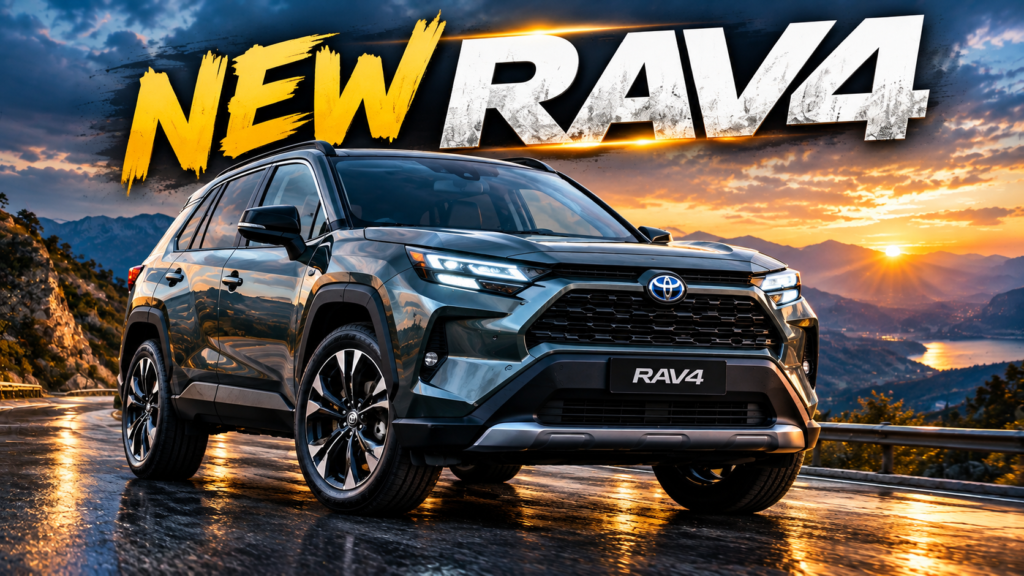
2026 Toyota RAV4: Hybrid vs. PHEV, Trims, Range and Which One to Buy
The 2026 Toyota RAV4 enters its sixth generation with a completely redesigned body, a more digital interior and an all-electrified U.S. lineup. Instead of offering a conventional gasoline-only version, Toyota focuses the new RAV4 range on hybrid and plug-in hybrid powertrains.
That makes the 2026 RAV4 more interesting than a simple redesign. Buyers now have several distinct versions to consider, including the standard Hybrid, the Plug-in Hybrid, the rugged-looking Woodland and the performance-oriented GR SPORT.
But which one actually makes the most sense?
For most drivers, the standard RAV4 Hybrid remains the easiest choice because it does not require external charging. The Plug-in Hybrid becomes more attractive for drivers who can charge at home and regularly make shorter trips. The Woodland targets buyers who want a more outdoor-oriented setup, while the GR SPORT is aimed at those who want a sportier driving experience.
This guide looks beyond the specification sheet to explain what changed, how the different versions compare and which 2026 RAV4 is likely to make the most sense for different types of drivers.
Quick Answer: Which 2026 RAV4 Should You Buy?
The right RAV4 depends mainly on how you drive.
| Buyer | Best choice | Why |
|---|---|---|
| Daily commuter without home charging | RAV4 Hybrid | No external charging required |
| Driver with home charging | RAV4 Plug-in Hybrid | Electric driving capability for daily trips |
| Family focused on practicality | RAV4 Hybrid | Efficient and straightforward to use |
| Outdoor-oriented driver | RAV4 Woodland | Rugged equipment and standard AWD |
| Driver who wants a sportier RAV4 | RAV4 GR SPORT | Sport-tuned chassis and PHEV power |
| Buyer focused on the lowest entry price | RAV4 Hybrid LE | Lowest starting MSRP in the U.S. lineup |
The important point is that the most expensive RAV4 is not automatically the best one. The powertrain and equipment should match your actual driving habits.
What Is New for the 2026 Toyota RAV4?
The 2026 model represents the sixth generation of the RAV4.
Toyota redesigned the exterior and interior while also updating the hybrid systems, infotainment technology and safety features. The lineup is now organized around different priorities rather than simply offering several equipment levels of the same basic vehicle.
The main changes include:
- A completely redesigned sixth-generation body.
- Hybrid and plug-in hybrid powertrains for the U.S. market.
- Up to 236 net combined horsepower for the AWD Hybrid.
- Up to 324 net combined horsepower for the Plug-in Hybrid.
- Up to 52 miles of manufacturer-estimated all-electric driving range for the PHEV.
- New Toyota Audio Multimedia technology.
- Toyota Safety Sense 4.0.
- New Woodland and GR SPORT versions.
- A more digital interior.
- Updated software architecture through Toyota’s Arene platform.
The result is a RAV4 lineup that covers a wider range of buyers than before.
2026 Toyota RAV4 Exterior Design
The sixth-generation RAV4 receives a much more angular and modern design.
Toyota organizes the lineup around three broad design directions: Core, Sport and Rugged.
The Core models are intended for everyday use. Sport versions such as the SE and XSE use a more aggressive appearance, while the Woodland gives the RAV4 a more adventurous character.
The GR SPORT is the most performance-oriented version of the range. It receives changes to the suspension, steering, body rigidity and aerodynamic treatment, along with 20-inch wheels.
The Woodland follows a different philosophy. Instead of trying to make the RAV4 a performance SUV, Toyota gives it equipment and styling intended to suit outdoor use.
This distinction is important because the Woodland is still a compact crossover. It is designed for light trail and outdoor use rather than replacing a dedicated body-on-frame off-road vehicle.
2026 RAV4 Dimensions and Cargo Space
The RAV4 remains a compact SUV, which is one of its biggest advantages for everyday use.
Toyota lists approximately:
| Specification | 2026 RAV4 |
|---|---|
| Length | Approximately 181 inches |
| Width | Approximately 73 inches |
| Wheelbase | 105.9 inches |
| Maximum ground clearance | Approximately 8.4 inches |
| Cargo behind rear seats | Up to 37.8 cu. ft. |
| Maximum cargo volume | Up to 69.8 cu. ft. |
| Maximum towing | Up to 3,500 lb, depending on configuration |
The practical advantage of these dimensions is that the RAV4 can remain relatively easy to use in urban environments while still providing useful cargo space for family trips, shopping and outdoor equipment.
Exact equipment and capacities can vary by configuration and market.
2026 Toyota RAV4 Hybrid: Power and Efficiency
The standard Hybrid is likely to remain the most sensible version for a large number of buyers.
It combines a 2.5-liter four-cylinder gasoline engine with Toyota’s hybrid system and electric motors.
For the U.S. market, the 2026 RAV4 Hybrid is available with either front-wheel drive or all-wheel drive, depending on the grade.
The outputs are:
- 226 net combined horsepower with FWD.
- 236 net combined horsepower with AWD.
- Up to a manufacturer-estimated 44 mpg combined rating for applicable FWD models.
One of the biggest advantages of the standard Hybrid is convenience.
You do not need to plug the vehicle into a charger. The hybrid battery is charged through the vehicle’s hybrid system and regenerative braking.
That makes the regular Hybrid particularly attractive to drivers who want better efficiency without changing their daily routine.
For someone who regularly drives long distances or does not have convenient access to home charging, this simplicity can be more valuable than the additional electric range of a PHEV.
2026 Toyota RAV4 Plug-in Hybrid
The Plug-in Hybrid is the most powerful RAV4 configuration.
Toyota’s sixth-generation PHEV system combines the 2.5-liter gasoline engine with a larger battery and electric motors.
The system produces up to 324 net combined horsepower.
More importantly, Toyota estimates up to 52 miles of all-electric driving range for the 2026 RAV4 Plug-in Hybrid.
That does not mean every driver will achieve 52 miles in every situation. Temperature, speed, driving style, traffic and other conditions can affect real-world electric range.
The advantage of the PHEV is flexibility.
A driver can use electric power for shorter daily trips and still rely on the gasoline engine for longer journeys.
The U.S.-market PHEV lineup also comes with all-wheel drive as standard.
RAV4 PHEV Charging
Charging is one of the biggest differences between the Hybrid and Plug-in Hybrid.
The regular RAV4 Hybrid does not need an external charger.
The PHEV, however, has a much larger battery and is designed to be charged from an external power source.
Toyota offers different charging hardware depending on the version. Selected PHEV grades also support DC fast charging.
Toyota estimates that applicable versions can charge from 10 to 80 percent in approximately 30 minutes under specified conditions.
For most PHEV owners, however, home charging can be more important than fast charging.
If the vehicle is charged regularly overnight, many everyday trips can potentially be completed using mostly electric power.
That is why the PHEV makes the most sense for drivers who have reliable access to charging.
2026 RAV4 Hybrid vs. Plug-in Hybrid: Which One Makes More Sense?
The two powertrains are aimed at different types of drivers.
Choose the RAV4 Hybrid if:
- You do not have convenient access to home charging.
- You regularly drive long distances.
- You want a simple ownership experience.
- You do not want to plan your routine around charging.
- You want good fuel efficiency without paying extra for a PHEV.
Choose the RAV4 Plug-in Hybrid if:
- You can charge at home regularly.
- Most of your daily trips are relatively short.
- You want meaningful electric-only driving capability.
- You want more performance.
- You are comfortable paying more for the additional technology.
The important trade-off
The Plug-in Hybrid is not automatically the better choice simply because it is more powerful and can drive on electricity.
Its biggest advantage appears when the owner actually charges it regularly.
If a driver rarely plugs in, much of the PHEV’s potential advantage is lost.
For that reason, a driver without convenient charging may be better served by the standard Hybrid.
2026 Toyota RAV4 Interior
The sixth-generation RAV4 receives a significantly more digital cabin.
A 12.3-inch digital instrument cluster is standard across the lineup, while the central multimedia display is available in 10.5-inch or 12.9-inch configurations depending on trim.
Wireless Apple CarPlay and wireless Android Auto are also supported.
The overall approach is still practical rather than overly complicated. The RAV4 keeps its focus on everyday usability, passenger space and flexible cargo capacity.
Higher trims add more comfort and premium equipment, but buyers should remember that moving up the trim ladder can significantly increase the price.
For many buyers, the best value may therefore come from choosing the right powertrain first and then selecting only the equipment they actually need.
Infotainment and Software
The 2026 RAV4 also marks an important technology update for Toyota.
The vehicle introduces the latest generation of Toyota Audio Multimedia and Toyota’s Arene software platform.
The new multimedia system focuses on a more responsive interface, improved voice interaction and modern connectivity.
This is more than simply adding a larger screen. Toyota is increasingly treating software as an important part of the vehicle experience.
For everyday drivers, the most noticeable benefits are likely to be the digital displays, smartphone integration and updated multimedia interface.
2026 Toyota RAV4 Safety
Safety remains one of the main strengths of the RAV4.
The 2026 model introduces Toyota Safety Sense 4.0, the company’s latest driver-assistance system.
The system includes technologies designed to assist with collision avoidance, lane-related situations and other driving conditions.
Blind Spot Monitoring with Rear Cross-Traffic Alert is also standard in the U.S. lineup.
However, buyers should always check the exact safety equipment offered in their own country because specifications can differ between markets.
2026 Toyota RAV4 Woodland
The Woodland is designed for buyers who want a more rugged RAV4 without moving to a much larger SUV.
It combines standard all-wheel drive with outdoor-oriented equipment and all-terrain tires.
The increased ground clearance and rugged equipment make it more suitable for gravel roads, campsites and light trail use than a conventional city-focused crossover.
But expectations should remain realistic.
The Woodland is still a unibody compact crossover. It should not be considered a replacement for a dedicated off-road vehicle designed around a body-on-frame platform.
For buyers who mainly drive on paved roads but occasionally head outdoors, however, the Woodland can provide a useful middle ground.
2026 Toyota RAV4 GR SPORT
The GR SPORT is the performance-focused addition to the RAV4 lineup.
It is based around the Plug-in Hybrid powertrain and produces up to 324 net combined horsepower.
Toyota also gives it a sport-tuned suspension and steering setup, increased body rigidity, aerodynamic changes and 20-inch wheels.
This makes the GR SPORT fundamentally different from the Woodland.
The Woodland prioritizes outdoor capability and rugged character, while the GR SPORT is designed around a more dynamic driving experience.
For buyers who want an efficient family SUV but still care about performance and styling, the GR SPORT is the most interesting version of the lineup.
Which 2026 RAV4 Trim Should You Choose?
Toyota offers several grades, each with a different purpose.
| Trim | Best for |
|---|---|
| LE | Buyers looking for the lowest entry point |
| XLE Premium | Buyers wanting more comfort and convenience |
| Limited | Buyers wanting a more premium experience |
| SE | Buyers who prefer sportier styling |
| XSE | Buyers wanting a sporty PHEV configuration |
| Woodland | Buyers focused on outdoor-oriented use |
| GR SPORT | Buyers wanting the sportiest RAV4 |
The key is not to automatically choose the highest trim.
If you mainly commute in the city, a standard Hybrid may be more useful than a high-performance PHEV.
If you regularly travel outdoors, the Woodland may make more sense.
If you want maximum performance from the RAV4 lineup, the GR SPORT is the obvious choice.
2026 Toyota RAV4 vs. Honda CR-V
The Honda CR-V remains one of the RAV4’s most important competitors in the compact SUV segment.
Both vehicles focus on practicality, efficiency, family usability and everyday comfort.
The major difference is the range of electrified options available.
The 2026 RAV4 gives U.S. buyers a choice between a conventional Hybrid and a Plug-in Hybrid, while the exact CR-V powertrain lineup depends on the market.
| Category | 2026 Toyota RAV4 | Honda CR-V |
|---|---|---|
| Segment | Compact SUV | Compact SUV |
| Hybrid option | Yes | Yes |
| Plug-in hybrid | Available in the RAV4 lineup | Market dependent |
| AWD | Available depending on version | Available depending on version |
| Family practicality | Strong | Strong |
| Main advantage | Broad electrified lineup | Comfort and practical packaging |
The RAV4 is particularly attractive for buyers who want the flexibility of choosing between a regular hybrid and a plug-in hybrid.
The CR-V remains a strong alternative for buyers who prefer Honda’s approach to comfort, interior packaging and everyday driving.
The best choice ultimately depends on the exact versions and prices available in your market.
2026 Toyota RAV4 Price
For the U.S. market, Toyota lists the 2026 RAV4 Hybrid LE with a starting MSRP of $31,900 before destination charges.
Toyota lists the following starting prices for selected PHEV versions:
| Version | Starting U.S. MSRP |
|---|---|
| RAV4 Hybrid LE | $31,900 |
| RAV4 PHEV SE | $41,500 |
| RAV4 PHEV Woodland | $45,300 |
| RAV4 PHEV XSE | $47,200 |
| RAV4 PHEV GR SPORT | $48,500 |
These are U.S. MSRP figures and should not be treated as global pricing.
Taxes, destination charges, options, incentives and local equipment can change the final price.
If you are shopping outside the United States, always check the price and equipment with the local Toyota distributor.
2026 RAV4 vs. Previous Generation
The biggest difference is that the 2026 model is a completely new sixth generation rather than a minor facelift.
The exterior and interior have been redesigned, while the hybrid and plug-in hybrid systems have also been updated.
The new model also expands the character of the lineup.
The Woodland provides a more rugged interpretation, while the GR SPORT introduces a performance-focused RAV4.
The technology package has also moved forward with updated multimedia, digital displays and Toyota’s new software architecture.
For existing RAV4 owners, the decision to upgrade therefore depends on whether the new design, technology and electrified powertrains justify the additional cost.
Is the 2026 Toyota RAV4 a Good Family SUV?
Yes, especially for buyers who want a compact SUV that can handle a mixture of city driving, commuting, family trips and occasional outdoor activities.
The RAV4’s size keeps it manageable in urban environments while its cargo area provides useful space for luggage and everyday equipment.
The standard Hybrid is particularly convenient for families who do not want to deal with charging.
The PHEV is more interesting for households that can charge at home and have predictable daily driving patterns.
The most important decision is therefore not simply whether the RAV4 is practical. It is choosing the version that fits your lifestyle.
Pros and Cons
Pros
- Broad choice of hybrid and plug-in hybrid versions.
- No gasoline-only version in the U.S. 2026 lineup.
- AWD availability on selected Hybrid models.
- Standard AWD on U.S.-market PHEV models.
- Up to 52 miles of manufacturer-estimated electric range for the PHEV.
- Up to 324 net combined horsepower.
- Practical compact SUV dimensions.
- Strong cargo flexibility.
- New digital interior and multimedia technology.
- Multiple versions for different types of buyers.
Cons
- PHEV models cost significantly more than the entry Hybrid.
- PHEV benefits depend heavily on regular charging.
- The large number of trims can make the lineup confusing.
- Specifications and equipment vary between markets.
- The Woodland is not a dedicated off-road vehicle.
- Higher trims can quickly increase the purchase price.
Who Should Buy the 2026 Toyota RAV4?
Buy the RAV4 Hybrid if you want:
- Simple ownership.
- Good efficiency.
- No charging requirements.
- A practical family SUV.
- Long-distance flexibility.
Buy the RAV4 Plug-in Hybrid if you want:
- Electric driving capability.
- More power.
- AWD.
- The ability to use gasoline for longer trips.
- Regular access to charging.
Buy the Woodland if you want:
- A more rugged design.
- Outdoor-oriented equipment.
- Standard AWD.
- A RAV4 suited to light trail and adventure use.
Buy the GR SPORT if you want:
- The most powerful RAV4 configuration.
- Sportier suspension and steering.
- More aggressive styling.
- A more performance-oriented driving experience.
Our Verdict
The 2026 Toyota RAV4 is more than a simple redesign. Toyota has turned the sixth-generation model into a broader family of SUVs aimed at different types of drivers.
For most buyers, the standard RAV4 Hybrid is still the safest choice. It provides efficiency without requiring access to a charger and remains practical for both city driving and longer trips.
The Plug-in Hybrid is the more interesting choice for drivers who can charge at home regularly. Its electric range and higher power can make it more appealing, but the additional purchase cost means it only makes sense if the owner will actually use those advantages.
The Woodland is the better choice for drivers who want a more rugged personality and outdoor-oriented equipment, while the GR SPORT is aimed at buyers who care more about performance and driving character.
Ultimately, the best 2026 RAV4 is not necessarily the most expensive one. The right powertrain and trim for your daily driving habits will matter more than simply choosing the highest specification.
Frequently Asked Questions
How much horsepower does the 2026 Toyota RAV4 have?
The 2026 RAV4 Hybrid produces up to 236 net combined horsepower with AWD, while the Plug-in Hybrid produces up to 324 net combined horsepower.
What is the electric range of the 2026 RAV4 Plug-in Hybrid?
Toyota estimates up to 52 miles of all-electric driving range for the 2026 RAV4 Plug-in Hybrid in the U.S. market.
Does the 2026 RAV4 have a gasoline-only version?
For the U.S. market, Toyota’s 2026 RAV4 lineup consists of Hybrid and Plug-in Hybrid models rather than a conventional gasoline-only version.
Does the 2026 RAV4 have all-wheel drive?
Yes. AWD is available on selected Hybrid versions, while the U.S.-market Plug-in Hybrid lineup comes with AWD as standard.
Is the RAV4 Woodland a real off-road vehicle?
The Woodland is designed for outdoor-oriented driving and light trail use, but it remains a compact crossover rather than a dedicated body-on-frame off-road vehicle.
Is the RAV4 Hybrid better than the Plug-in Hybrid?
It depends on how you drive. The Hybrid is better for simplicity and long-distance flexibility without charging. The Plug-in Hybrid is more attractive if you can charge regularly and want electric driving capability and more power.
How much does the 2026 RAV4 cost?
The 2026 RAV4 Hybrid LE starts at $31,900 MSRP in the United States before destination charges. PHEV models start higher, with U.S. MSRP starting at $41,500 for the SE.
Are these specifications valid worldwide?
Not necessarily. Prices, equipment, powertrains and availability can vary by country. The specifications and prices in this guide primarily refer to the U.S. market.
Sources
Information in this article is based primarily on official Toyota USA materials, including Toyota’s 2026 RAV4 product information, specifications and U.S. pricing. Specifications and pricing can change, so readers outside the United States should verify local-market information with their regional Toyota distributor.