

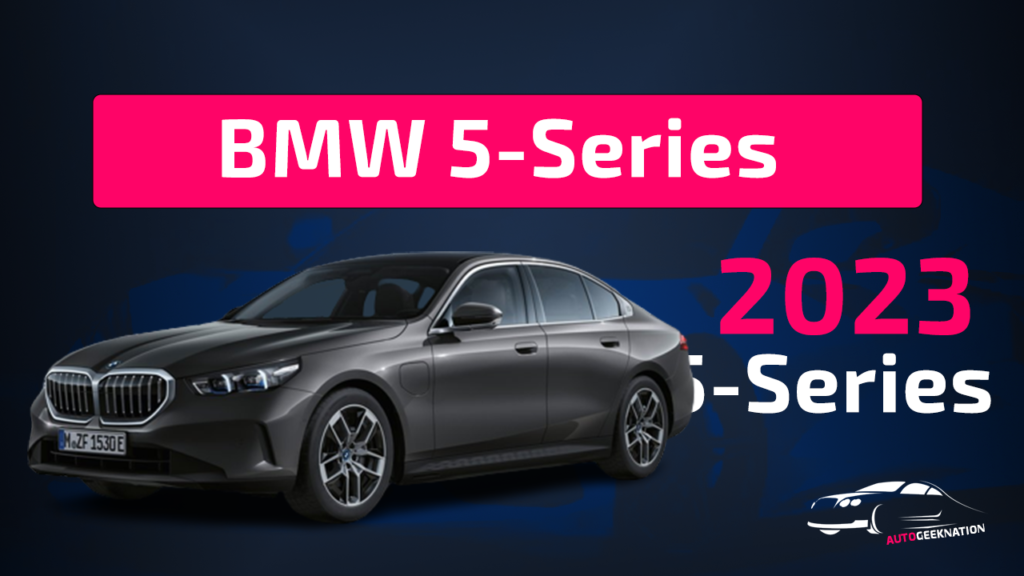
BMW has long treated the Chinese market differently from many other regions, particularly when it comes to rear-seat comfort. The latest generation of the BMW 5 Series Sedan continues that strategy with a long-wheelbase version developed specifically for China.
For the first time, the Chinese-market 5 Series also brought a fully electric counterpart built around the same long-wheelbase philosophy: the BMW i5 Sedan.
BMW began production of these China-specific models at the Dadong plant in Shenyang in early 2024. Both the combustion-powered 5 Series and the electric i5 were developed specifically for Chinese customers, with additional rear-seat space and market-specific equipment.
The result is not simply a standard 5 Series with a larger cabin. BMW has made a number of changes to turn the long-wheelbase models into more rear-passenger-oriented executive sedans.
Why Does China Get a Long-Wheelbase BMW 5 Series?
Rear-seat space has particular importance in China’s premium sedan market, where many owners use their cars with a driver.
BMW therefore stretched the wheelbase of the Chinese 5 Series to 3,105 mm. The current China-specification i5 uses the same 3,105-mm wheelbase and measures 5,175 mm long, 1,900 mm wide and 1,520 mm high.
The additional length is not merely a styling exercise. BMW specifically designed the car to provide greater rear-seat legroom and a more spacious passenger environment.
The company describes the Chinese version as having distinctive proportions and increased rear spatial comfort compared with the standard-wheelbase model sold in other markets.
That makes the long-wheelbase 5 Series particularly relevant to buyers who spend significant time in the rear seat.
The BMW i5 Brings Electric Power to the Long-Wheelbase Formula
The biggest change for the Chinese market is the arrival of the BMW i5 long-wheelbase sedan.
While the standard global BMW 5 Series generation was already available with electric power, BMW introduced the China-specific long-wheelbase i5 as part of the country’s locally tailored lineup.
Current BMW China specifications include three long-wheelbase electric versions:
- i5 eDrive35L
- i5 eDrive40L
- i5 xDrive50L
The most powerful of these, the xDrive50L, uses all-wheel drive and produces 385 kW and 775 Nm, with a claimed 0–100 km/h time of 4.2 seconds.
The eDrive35L and eDrive40L use rear-wheel drive, with BMW listing 200 kW and 240 kW respectively. Both have a claimed 0–100 km/h time of 6.7 seconds.
This gives the Chinese i5 range a useful spread: the eDrive35L focuses more on accessibility and efficiency, while the eDrive40L and xDrive50L provide progressively stronger performance.
Electric Range Depends on the Version
Range is another area where it is important to distinguish between variants.
BMW China’s current specifications list CLTC ranges of:
| Model | Power | 0–100 km/h | CLTC range |
|---|---|---|---|
| i5 eDrive35L | 200 kW | 6.7 sec | 618 km |
| i5 eDrive40L | 240 kW | 6.7 sec | 713 km |
| i5 xDrive50L | 385 kW | 4.2 sec | 651 km |
These are CLTC figures, China’s testing cycle. They should not be directly compared with EPA or WLTP range numbers because the testing procedures are different.
The higher range of the rear-wheel-drive eDrive40L compared with the more powerful xDrive50L also illustrates a familiar EV trade-off: adding performance and all-wheel drive can affect energy consumption and therefore certified range.
Charging Is Designed for Executive-Car Use
BMW’s current China specification lists a DC fast-charging time of approximately 33 minutes from 10% to 80% for the three i5 long-wheelbase variants, based on the specified charging conditions.
The charging hardware differs between versions, with BMW listing up to 160 kW for the eDrive35L and up to 190 kW for the eDrive40L and xDrive50L under the relevant specification.
As always with EV charging, the actual result depends on the charger, battery temperature, state of charge and other conditions.
The Rear Seat Is the Real Focus
The Chinese BMW 5 Series and i5 are designed around an important local-market expectation: a premium sedan should be comfortable for passengers as well as enjoyable for the person driving.
BMW uses the extended wheelbase to create a more generous rear compartment. But the company also adds equipment intended specifically to make the rear cabin more useful for longer journeys.
Depending on specification, the Chinese-market cars can feature four-zone automatic climate control, allowing separate temperature settings for different areas of the cabin.
The interior can also include upgraded seat materials, additional rear comfort equipment and premium audio options.
This is one area where the Chinese 5 Series differs noticeably in emphasis from the more driver-focused image historically associated with the model.
The BMW Theatre Screen Is One of the Biggest Differences
One of the most unusual options available for the Chinese long-wheelbase 5 Series and i5 is BMW’s rear-seat entertainment system known as the BMW Theatre Screen.
The system uses a 31.3-inch panoramic display with 8K resolution and 5G connectivity. BMW introduced it as a China-specific luxury feature, giving rear passengers an entertainment experience more commonly associated with a high-end lounge or private cinema than a conventional business sedan.
The system can be paired with a Bowers & Wilkins surround-sound system, further emphasizing the rear-seat entertainment concept.
However, it is worth remembering that this is an optional/high-specification feature rather than something fitted to every Chinese-market 5 Series or i5.
Digital Technology Moves Beyond the Screen
The latest 5 Series generation introduced BMW’s updated digital interface, including the BMW Curved Display and the further-developed BMW iDrive system with QuickSelect.
For the China-specific models, BMW also adds market-specific digital services and connectivity features.
Current BMW China specifications list 5G network capability on the i5 long-wheelbase range, subject to network availability. The cars also use newer generations of BMW’s operating system depending on production date and variant.
For example, BMW states that i5 eDrive35L vehicles produced from January 2025 use BMW Operating System 9, while earlier 2024 production used Operating System 8.5.
That production-date distinction matters when comparing used or older Chinese-market i5 models.
A More Distinctive Exterior for China
The long-wheelbase versions retain the basic design language of the eighth-generation 5 Series but have proportions adapted to their extended wheelbase.
BMW’s Chinese-market design includes a prominent kidney grille, contemporary twin headlights and details intended to distinguish the local version.
The objective is not simply to make the sedan larger. The extended body is integrated into the overall proportions so that the extra wheelbase contributes to the car’s executive-sedan character.
Interior Materials Reflect the Premium Positioning
The cabin can be specified with details such as BMW’s illuminated interaction bar, premium trim elements and upgraded seat upholstery.
BMW has also offered CraftedClarity-style crystal interior controls and market-specific decorative elements on higher specifications. The Chinese 5 Series has received particular attention to rear-seat presentation, including special seat designs and additional comfort equipment.
This is where the Chinese version starts to overlap with features traditionally associated with BMW’s larger luxury sedans.
The i5 Is Not Just a 5 Series With a Battery
Although the BMW i5 shares its basic 5 Series identity and long-wheelbase proportions, the electric version changes the character of the car.
The absence of a combustion engine allows BMW to deliver instant electric torque, quieter operation and a different driving experience.
At the top of the Chinese range, the xDrive50L combines dual-motor all-wheel drive with 775 Nm of torque and a 4.2-second 0–100 km/h claim.
Meanwhile, the eDrive40L prioritizes a balance between performance and range, with BMW currently quoting up to 713 km on the CLTC cycle.
That makes the i5 lineup broader than simply offering one electric alternative to the gasoline 5 Series.
BMW’s 5 Series Has a Long History in China
The importance of the 5 Series to BMW’s Chinese operation is not new.
BMW says more than 10 million 5 Series vehicles had been produced worldwide since 1972 by early 2023. In China alone, approximately 530,000 5 Series vehicles were delivered between 2020 and 2022, according to BMW.
BMW also states that around two million 5 Series vehicles had been sold in China since local production began.
That history helps explain why BMW developed a dedicated long-wheelbase strategy rather than simply importing the global sedan unchanged.
Produced in China for Chinese Customers
The Chinese-market 5 Series and i5 are produced by BMW Brilliance Automotive in Shenyang.
BMW announced production at the Dadong plant for these China-specific models in connection with their 2024 market launch.
This is part of BMW’s broader manufacturing presence in China and its long-standing partnership with Brilliance.
The approach also allows BMW to tailor equipment, digital services and vehicle specifications to local customer expectations rather than relying entirely on a global specification.
How the Chinese i5 Fits Into BMW’s Global Electric Strategy
The i5 is important because it represents the electric transition of one of BMW’s most established executive sedans.
Instead of creating a completely separate electric luxury sedan with no connection to the 5 Series, BMW has positioned the i5 alongside combustion-powered versions of the same model family.
That gives buyers a choice between different powertrains while maintaining the familiar 5 Series identity.
The Chinese long-wheelbase version takes that idea one step further by adding a market-specific focus on rear passenger comfort.
What Makes the China-Specific 5 Series and i5 Different?
The main differences can be summarized simply:
- Longer 3,105-mm wheelbase
- Greater emphasis on rear passenger space
- China-specific equipment and digital services
- BMW Theatre Screen availability
- 5G connectivity on current i5 specifications
- Multiple long-wheelbase i5 powertrains
- Rear-wheel-drive and all-wheel-drive options for the i5
- Production in Shenyang for the Chinese market
- Updated BMW operating systems depending on production date
The important point is that these are not merely cosmetic changes. BMW has adapted the car around how premium sedans are used in China.
Final Verdict
The China-specific BMW 5 Series and i5 demonstrate how a global automotive manufacturer can adapt an established model to a particular market without abandoning its core identity.
The extended wheelbase gives rear passengers more room, while features such as the BMW Theatre Screen, four-zone climate control and premium audio systems push the cabin toward a more luxurious, passenger-oriented experience.
The BMW i5 adds another dimension. With versions ranging from the 200-kW eDrive35L to the 385-kW xDrive50L, buyers can choose between efficiency, range and performance rather than being locked into a single electric specification.
Most importantly, the original story of the China-specific 5 Series is no longer about an upcoming model. These cars entered production in 2024 and have since evolved through updated equipment and specifications.
For BMW, the Chinese 5 Series remains a crucial executive sedan. For buyers, the i5 offers an increasingly convincing electric alternative while preserving the spacious rear cabin and familiar 5 Series identity.
FAQ
Is the BMW i5 made specifically for China?
The Chinese-market i5 long-wheelbase sedan was developed specifically for China and is produced locally in Shenyang. It differs from the standard-wheelbase i5 sold in many other markets.
How long is the Chinese BMW i5?
The current China-specification i5 long-wheelbase models measure 5,175 mm long and use a 3,105-mm wheelbase.
What is the range of the BMW i5 in China?
Current BMW China figures list up to 713 km CLTC for the i5 eDrive40L. The eDrive35L is listed at 618 km and the xDrive50L at 651 km under the CLTC test cycle.
Which Chinese BMW i5 is the fastest?
The current i5 xDrive50L is the quickest of the listed China long-wheelbase versions, with BMW quoting 0–100 km/h in 4.2 seconds.
Does the Chinese BMW 5 Series have a longer wheelbase?
Yes. The Chinese-market long-wheelbase 5 Series uses a 3,105-mm wheelbase and was developed specifically to increase rear-seat space and comfort.
What is the BMW Theatre Screen?
It is an optional rear-seat entertainment system using a 31.3-inch panoramic 8K display with 5G connectivity. It was introduced as a China-specific feature for the long-wheelbase 5 Series.
Where is the Chinese BMW 5 Series produced?
The China-specific 5 Series and i5 are produced at BMW Brilliance Automotive’s Dadong plant in Shenyang.
Does every Chinese BMW i5 have the same equipment?
No. Equipment varies by version, trim, options and production date. BMW’s China specification sheets specifically note differences between eDrive35L, eDrive40L and xDrive50L models, as well as changes to software and available equipment over time.
Sources
- BMW Group — New BMW 5 Series and BMW i5 for China
- BMW China — i5 Long-Wheelbase Specifications
- BMW China — 5 Series Specifications
- BMW China — i5 Model Information
- BMW Group — 5 Series China History and Sales
- BMW China — China-Specific 5 Series Interior and Theatre Screen