

What happens when a racing project that disappeared for more than five decades is given a second chance?
Lotus answered that question with the Type 66, an extremely limited track car inspired by a Can-Am racing project originally conceived in the late 1960s.
Rather than restoring an old racing car or producing a conventional continuation model, Lotus used surviving drawings from the original project and combined them with modern computer-aided design, materials, safety equipment and aerodynamic development.
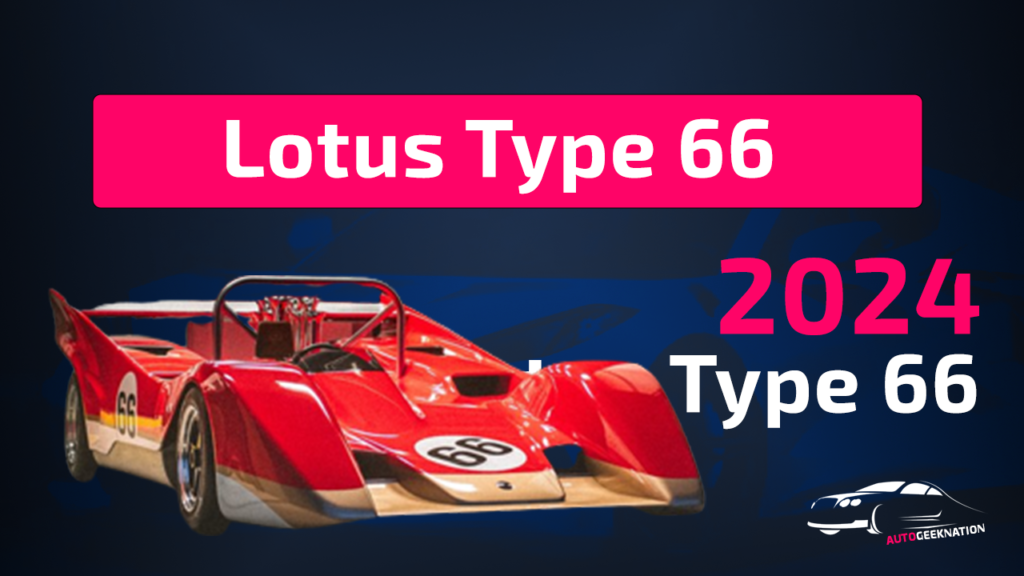
The result is a car that looks as though it escaped from the Can-Am era but was engineered for a modern race track.
Only 10 examples are planned, making the Type 66 one of the most exclusive projects in Lotus history. (Lotus Cars)
The Lost Lotus Project Behind the Type 66
The story begins with Lotus founder Colin Chapman and Team Lotus draughtsman Geoff Ferris.
During the late 1960s, they worked on drawings for a Lotus entry into the Canadian-American Challenge Cup, better known as Can-Am. The project never reached the racing grid and the original plans were eventually believed to have been lost.
In 2016, however, Chapman’s son Clive Chapman uncovered the drawings. They had been copied onto microfilm and stored away, effectively preserving a design that had never progressed beyond the drawing-board stage. (Lotus Cars)
That discovery eventually gave Lotus the opportunity to revisit the project.
Instead of trying to reproduce the original car exactly, Lotus Advanced Performance digitised the historical drawings and created modern 3D models around them.
This approach allowed the designers and engineers to preserve the character of the original concept while incorporating technology that simply did not exist when the drawings were created.
The Type 66 Is Not a Classic-Car Restoration
This distinction is important.
The Type 66 is not an original 1970 Lotus race car, nor is it a conventional restoration. Lotus describes it as a contemporary reinterpretation of the lost Type 66 concept.
The design retains period-inspired features such as the wedge-shaped body, large rear wing and exposed engine intake trumpets, but the underlying engineering has been updated for modern track use. (Lotus Cars)
That makes the Type 66 an unusual combination of historical design and modern motorsport engineering.
It looks backward visually, but much of what makes it work comes from modern simulation, carbon-fibre construction, braking technology and aerodynamic development.
Why Only 10 Type 66s Will Be Built
Lotus plans to produce just 10 Type 66s.
The number is not arbitrary. It references the 10 rounds of the 1970 Can-Am Championship, creating a direct connection between the limited production run and the racing series for which the original concept was intended. (Lotus Cars)
This extremely small production run also positions the Type 66 as a collector-focused track machine rather than a conventional Lotus production model.
Lotus’s own heritage material describes it as a track-only project with an ultra-limited production run of ten cars. (Lotus Heritage)
A 5.8-Litre V8 Sits Behind the Driver
At the centre of the Type 66 is a 5.8-litre V8 push-rod engine mounted behind the cockpit.
Lotus currently lists a target output of more than 830 bhp at 8,800 rpm. The company explicitly identifies these figures as target specifications based on simulations, meaning they should not be presented as independently verified production-test results. (Lotus Cars)
The engine uses exposed intake trumpets, reinforcing the car’s connection to classic Can-Am racing.
Power is sent through a six-speed sequential racing gearbox with paddle-shift operation and a mechanical limited-slip differential.
The combination is deliberately old-school in character: a naturally mechanical racing layout combined with modern systems that make the car considerably more sophisticated than a genuine 1970s racer.
Modern Aerodynamics Transform the Classic Shape
The Type 66’s body may look like it belongs to another era, but Lotus has spent considerable effort developing its aerodynamic performance.
The company says its engineers completed more than 1,000 hours of computational fluid dynamics (CFD) work while developing the aerodynamic package. (Lotus Cars)
Lotus targets more than 800 kg of downforce, a remarkable figure for a car whose target unladen weight is below 950 kg.
The rear wing is one of the most obvious visual links to Can-Am racing, while the overall bodywork also incorporates inspiration from Lotus’s Type 72 Formula One car.
The result is a design where aerodynamic function is closely tied to the car’s historical appearance.
Downforce Could Exceed the Car’s Weight
One of the Type 66’s most striking claimed characteristics is the relationship between weight and aerodynamic load.
Lotus lists a target of at least 800 kg of downforce at 150 mph, while the car has a target unladen weight of 950 kg or less. (Lotus Cars)
In other words, the aerodynamic load at the specified speed approaches the car’s own mass.
That does not mean the Type 66 becomes physically “twice as heavy.” Downforce is aerodynamic force rather than additional static mass. But it illustrates how aggressively Lotus has approached the car’s track-focused aerodynamic design.
Lightweight Construction Remains Central
Weight has always been an important part of Lotus engineering philosophy, and the Type 66 continues that approach.
The car uses an aluminium monocoque frame and chassis panels, combined with moulded carbon-fibre bodywork.
Lotus also specifies removable front and rear body sections, adjustable dampers, double-wishbone suspension and adjustable anti-roll bars. (Lotus Cars)
The current target weight is 950 kg or less unladen.
That gives the Type 66 a very different engineering philosophy from modern high-performance road cars, which increasingly rely on large batteries, extensive comfort equipment and complex electronic systems.
Modern Safety for a Historic Design
Although the Type 66 is inspired by a period when racing safety standards were very different, Lotus has incorporated modern motorsport equipment.
The specification includes:
- Carbon-fibre crash structures
- Fixed rollover protection
- Six-point racing harness
- Racing ABS
- Carbon-ceramic brake discs
- Fire extinguisher
- Battery and engine kill switches
- Motorsport traction-control system
- Adjustable pedal box
These features help distinguish the Type 66 from simply building a vintage-looking car around an old racing concept.
The engineering objective is to recreate the visual and emotional character of historic Can-Am racing without simply reproducing the limitations of a 1970s race car.
Lotus Used Driver-in-the-Loop Simulation
Lotus did not need to build a complete fleet of prototypes to begin evaluating the Type 66’s potential.
The company used Driver-in-the-Loop technology to simulate how the car could perform on famous circuits.
Lotus says the simulated lap times were comparable to modern GT3 machinery. At Silverstone, for example, the company lists a simulated Type 66 time of 1:59.7, compared with a cited GT3 record of 1:58.2. (Lotus Cars)
These numbers should be understood for what they are: simulated performance estimates, not independently verified track-test results from a production Type 66.
That distinction is particularly important when discussing an ultra-limited car whose specifications are still presented by Lotus partly as targets.
A Driver-Focused Interior
The cabin is intentionally different from a modern luxury sports car.
The Type 66 features period-inspired analogue instruments, traditional rocker and flip switches, a hand-stitched steering wheel and a polished wooden gearshift.
Lotus combines these retro elements with modern systems such as a telematics data logger and motorsport electronics. (Lotus Cars)
The result is not an attempt to recreate a period interior perfectly. Instead, Lotus uses historical cues to create a cockpit that visually connects the driver with the car’s original Can-Am inspiration.
Two Classic Lotus-Inspired Liveries
Lotus has announced two primary colour schemes for the Type 66:
- Red and gold
- Black and gold
Both draw inspiration from historic Lotus racing liveries from the 1970s and 1980s.
Customers can also use Lotus’s bespoke colour and trim service to create a more personalised specification. (Lotus Cars)
Given the tiny production run, personalisation is particularly significant. Each car is effectively a highly individual piece of Lotus motorsport history.
The Type 66 Was Revealed at Monterey Car Week
Lotus unveiled the Type 66 publicly during Monterey Car Week 2023, at The Quail, A Motorsports Gathering in California.
The location was appropriate for a car rooted in Can-Am history and aimed at collectors and motorsport enthusiasts. Lotus’s official media archive documents the Type 66 unveiling at the event. (Lotus Cars Media)
The launch also coincided with Lotus’s 75th anniversary, adding another layer of historical significance to the project.
What Makes the Type 66 Different From a Modern Lotus?
The Type 66 occupies an unusual position within the Lotus range.
Modern Lotus has moved heavily toward electric performance and larger, more technologically complex vehicles. The Eletre and Emeya represent that newer direction, while the Emira became the final new Lotus production sports car with an internal-combustion engine under the company’s earlier strategy. (Lotus Cars)
The Type 66 is different because it exists primarily as a celebration of Lotus’s racing heritage.
It is not intended to be a mainstream production model. It is a track-focused special project that allows Lotus to revisit an unrealised chapter of its history using modern engineering.
Lotus Type 66 Specifications
| Specification | Lotus Type 66 |
|---|---|
| Production | 10 cars |
| Engine | 5.8-litre V8 push-rod |
| Power | More than 830 bhp target |
| Maximum engine speed | 8,800 rpm |
| Transmission | 6-speed sequential racing gearbox |
| Target 0–100 km/h | ≤ 3.0 seconds |
| Target top speed | ≥ 290 km/h / 180 mph |
| Target weight | ≤ 950 kg unladen |
| Target downforce | ≥ 800 kg at 150 mph |
| Brakes | Carbon-ceramic with racing ABS |
| Suspension | Double wishbones, adjustable dampers |
| Drive environment | Track only |
Specifications marked as targets are Lotus’s published target figures and are based partly on simulations. They should not be interpreted as independently verified production-test results. (Lotus Cars)
Why the Lotus Type 66 Matters
The Type 66 is interesting precisely because Lotus did not simply reproduce an old racing car.
Instead, the company took a forgotten design from its archive and asked what it might have become if modern engineering had been available when the original concept was created.
The answer is a lightweight, V8-powered, aerodynamically aggressive track machine that combines period styling with carbon fibre, modern braking systems, advanced simulation and contemporary safety equipment.
Its 10-car production run makes it exceptionally rare, but scarcity is only part of the story.
The more important element is the connection between the original Lotus designers, the Can-Am era, Clive Chapman’s rediscovery of the drawings and Lotus Advanced Performance’s modern interpretation.
Final Verdict
The Lotus Type 66 is best understood as a piece of motorsport history brought forward rather than a classic car brought back.
Its origins lie in a Lotus Can-Am project that never reached the starting grid. More than 50 years later, the recovered drawings became the foundation for a completely new track car.
With a target of more than 830 bhp, a sub-950-kg target weight and more than 800 kg of targeted downforce, the Type 66 has the numbers of an extremely serious circuit machine. But Lotus is careful to identify several of those figures as targets derived from simulations.
That makes the Type 66 fascinating for another reason: it represents a rare opportunity to see an unrealised piece of Colin Chapman’s racing imagination transformed using 21st-century technology.
Only 10 will be built.
For collectors, that makes the Type 66 rare. For Lotus enthusiasts, it makes it historical. And for motorsport fans, it represents something even more unusual—a Can-Am Lotus that never existed in period, finally given the opportunity to become real.
FAQ
What is the Lotus Type 66?
The Lotus Type 66 is a limited-production, track-only racing car based on a lost Lotus Can-Am project originally conceived in the late 1960s.
How many Lotus Type 66 cars will be built?
Lotus plans to build only 10 examples. The number references the 10 rounds of the 1970 Can-Am Championship. (Lotus Cars)
Is the Lotus Type 66 road legal?
No. The Type 66 is designed as a track-only car rather than a conventional road-legal Lotus production vehicle. (Lotus Heritage)
What engine does the Lotus Type 66 use?
It uses a 5.8-litre V8 push-rod engine mounted behind the cockpit. Lotus lists more than 830 bhp as a target at 8,800 rpm. (Lotus Cars)
How fast is the Lotus Type 66?
Lotus currently lists a target 0–100 km/h time of 3.0 seconds or less and a target top speed of at least 290 km/h (180 mph). These are published target figures rather than independently verified production results. (Lotus Cars)
How much downforce does the Type 66 produce?
Lotus targets more than 800 kg of downforce at 150 mph. The company says more than 1,000 hours of CFD work were used to develop the aerodynamic package. (Lotus Cars)
Who designed the original Lotus Type 66 concept?
The original Can-Am concept was developed by Colin Chapman and Team Lotus draughtsman Geoff Ferris. The surviving drawings were later rediscovered by Chapman’s son Clive Chapman. (Lotus Cars)
When was the Lotus Type 66 revealed?
Lotus unveiled the Type 66 at The Quail, A Motorsports Gathering, during Monterey Car Week 2023. (Lotus Cars Media)
Sources
- Lotus Cars — Type 66
- Lotus Heritage — Type 66
- Lotus Cars Media — Type 66 Special Projects
- Lotus Cars Media — Monterey Car Week 2023
- Lotus Cars — Driving Change ESG Charter