

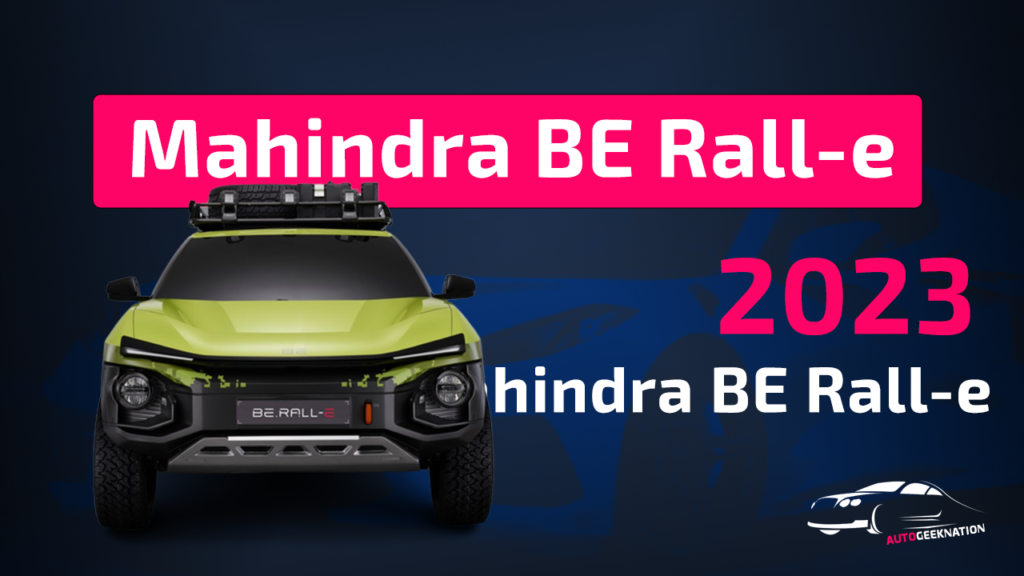
When Mahindra introduced the INGLO platform in 2022, it was presented as the foundation for a new generation of electric SUVs. At the time, the company showed five future models under the XUV and BE names.
That original plan has since evolved significantly. Mahindra moved from concepts such as the XUV.e8 and XUV.e9 to production models including the BE 6 and XEV 9e, followed by the larger XEV 9S. In 2026, Mahindra also introduced the BE 6 SPORTEQ, adding another version of the electric architecture with new software and technology features.
So what exactly is INGLO, and why is Mahindra placing so much emphasis on it?
What Is the INGLO EV Platform?
INGLO is Mahindra’s purpose-built electric vehicle architecture. Instead of taking an existing combustion-engine SUV and converting it into an EV, Mahindra designed INGLO around electric propulsion from the beginning.
One of its defining characteristics is a flat-floor skateboard architecture. The battery is integrated into the floor structure, while the electric drivetrain and other major components are packaged to leave more usable space for passengers.
Mahindra says the architecture combines a lightweight skateboard structure with high-density battery technology. The absence of a conventional transmission tunnel also allows greater flexibility inside the cabin.
The platform is also modular. That matters because Mahindra can use the same underlying architecture for vehicles with very different characters, from the sporty BE 6 to the larger XEV 9e and seven-seat XEV 9S.
From Five Concepts to Production SUVs
Mahindra’s original 2022 announcement introduced five electric SUVs:
- XUV.e8
- XUV.e9
- BE.05
- BE.07
- BE.09
The company described XUV as the more established SUV brand and BE as an electric-focused brand with a more unconventional design direction.
The production strategy eventually changed names and priorities.
The XUV.e9 evolved into the XEV 9e, while the BE.05 became the production BE 6. Both were unveiled in late 2024 and launched as Mahindra’s first production Electric Origin SUVs.
Mahindra subsequently expanded the family with the XEV 9S, a three-row, seven-seat electric SUV also based on INGLO.
This is an important distinction when looking back at older articles about INGLO: the original five-vehicle lineup should not be presented as though all five concepts became production models exactly as originally shown.
BE 6 and XEV 9e: The First Production INGLO SUVs
The BE 6 and XEV 9e represent the clearest demonstration of what Mahindra intended INGLO to become.
The BE 6 takes the sportier approach, with a compact SUV shape and performance-oriented positioning. The XEV 9e is larger and more premium, using a coupe-SUV silhouette and a more comfort-focused interior.
Both use Mahindra’s Electric Origin architecture and were launched with 59 kWh and 79 kWh battery options. The 79 kWh version was initially quoted with certified MIDC ranges of 682 km for the BE 6 and 656 km for the XEV 9e. These are Indian certification figures and should not be confused with EPA or WLTP range figures.
Mahindra quotes up to 210 kW of power, with 0–100 km/h acceleration of 6.7 seconds for the BE 6 and 6.8 seconds for the XEV 9e. With a 175 kW DC fast charger, the company says the battery can charge from 20% to 80% in under 20 minutes.
Those figures show why INGLO is more than simply a battery platform. Mahindra has designed the architecture around a combination of packaging, performance, charging and software.
Battery Technology and Fast Charging
Battery performance is one of the most important parts of the INGLO proposition.
The production BE 6 and XEV 9e use LFP battery chemistry in their 79 kWh packs. Mahindra has also offered 59 kWh versions, giving customers a choice between battery capacity and purchase cost.
Mahindra’s current INGLO technology information highlights a 20% to 80% charging target in around 20 minutes when using a 175 kW DC charger. Actual charging performance depends on the charger, battery temperature and other operating conditions.
That distinction is important. A vehicle’s advertised maximum charging capability does not mean every public charger will deliver that power.
INGLO Is Also a Software Platform
One of the biggest differences between Mahindra’s current Electric Origin SUVs and many traditional vehicles is the amount of software built into their architecture.
The BE 6 and XEV 9e use MAIA, Mahindra’s Artificial Intelligence Architecture, as part of their software-defined vehicle strategy.
Mahindra lists a Qualcomm Snapdragon 8295 processor, 24 GB of RAM, 128 GB of storage, 5G connectivity and support for over-the-air updates. The architecture also supports connected applications and advanced driver-assistance functions.
This means Mahindra is treating the vehicle less like a finished machine and more like a connected computing platform that can receive new software features over time.
That approach became even more visible with the 2026 BE 6 SPORTEQ.
The 2026 BE 6 SPORTEQ Shows Where INGLO Is Going
In August 2026, Mahindra introduced the BE 6 SPORTEQ, an expanded version of its electric SUV concept built around additional design, technology and software features.
The SPORTEQ range introduces new cockpit configurations, including a three-screen coast-to-coast display on specified versions, while the Formula E Freedom Edition retains a two-screen, race-inspired cockpit design.
Mahindra also introduced six new “TEQ” software suites. One of them, TEQ_Talk, uses Google Gemini technology for conversational interaction and can control or access functions such as navigation, music and vehicle features.
Perhaps more importantly for existing owners, Mahindra says software and technology features introduced with the SPORTEQ will begin rolling out to existing BE 6, XEV 9e and XEV 9S vehicles through over-the-air updates from January 2027, with the exact feature availability depending on model and variant.
That is a practical example of why Mahindra describes these vehicles as software-defined.
XEV 9S: INGLO Gets a Seven-Seat SUV
The INGLO platform is not limited to relatively compact electric SUVs.
The XEV 9S expands Mahindra’s Electric Origin range into the three-row segment. Mahindra describes it as a purpose-built seven-seat EV using the same INGLO skateboard architecture.
The flat-floor design is particularly useful in a vehicle of this type because it gives Mahindra more freedom to package the passenger compartment. The XEV 9S also uses a sliding second row to improve flexibility between passenger and cargo space.
This illustrates one of the main advantages of a scalable EV platform: the underlying architecture can support vehicles aimed at different families and use cases without requiring a completely separate engineering foundation.
Vehicle-to-Load and Everyday EV Use
Mahindra has also promoted practical functions beyond simply driving the vehicle.
Vehicle-to-load, or V2L, allows a compatible electric vehicle to supply electrical power to external equipment. This can be useful for activities such as powering appliances or equipment away from a conventional electrical outlet.
However, V2L capability should be considered a practical feature rather than a replacement for a home energy-storage system. Its usefulness depends on the vehicle’s equipment, power limits and the type of device being connected.
Safety and Vehicle Dynamics
INGLO was designed with more than battery packaging in mind.
The production BE 6 and XEV 9e use independent suspension, intelligent semi-active dampers and brake-by-wire technology. Mahindra also lists a variable-gear-ratio steering system and a 10-metre turning-circle diameter.
The platform’s low-mounted battery contributes to a low centre of gravity, while the flat-floor structure helps with packaging.
For buyers, however, platform specifications alone do not tell the whole story. Ride quality, braking feel, steering response and real-world efficiency still depend on the individual vehicle’s tuning, tires, software calibration and weight.
Mahindra’s Electric SUV Strategy Has Changed
The most interesting part of INGLO is arguably not one particular specification.
It is Mahindra’s shift from showing electric SUV concepts to developing a broader production ecosystem around a common architecture.
The company has already moved from the original concept announcement to production BE 6 and XEV 9e models, expanded into the seven-seat XEV 9S, and introduced the BE 6 SPORTEQ as another development of the same electric-origin philosophy.
That progression also explains why some older descriptions of the INGLO program now feel outdated. The platform is no longer just a promise of future electric SUVs; it is supporting vehicles that customers can actually buy and use.
Battery-as-a-Service Adds a Different Ownership Model
In August 2026, Mahindra expanded its Battery-as-a-Service (BaaS) program across the BE 6 SPORTEQ, XEV 9S and XEV 9e.
Under the model, the vehicle and battery are financed separately. Mahindra announced BaaS starting prices of ₹11.45 lakh for the BE 6 SPORTEQ, ₹12.65 lakh for the XEV 9S and ₹13.90 lakh for the XEV 9e, with battery usage priced through the associated financing structure.
These figures need to be read carefully: BaaS is a financing product, not simply a pay-as-you-drive battery rental. Mahindra states that financing approval, battery EMI, charging, maintenance and other costs are subject to the applicable terms.
For customers comparing EV ownership costs, that distinction matters.
What Makes INGLO Important?
INGLO matters because Mahindra is attempting to build an entire family of electric SUVs around a common electric-first foundation.
Its strongest elements are not just headline range figures. The platform combines:
- A dedicated flat-floor EV architecture
- High-capacity LFP battery options
- Fast DC charging capability
- Up to 210 kW of power in the current BE 6/XEV 9e applications
- Independent suspension and semi-active damping
- Software-defined vehicle architecture
- 5G connectivity
- Over-the-air software updates
- Advanced driver-assistance technology
- A scalable design that supports different SUV body styles
The result is a strategy that connects mechanical engineering with software development rather than treating electrification as simply replacing an engine with a battery and motor.
The Bottom Line
Mahindra’s INGLO story has changed considerably since the platform was first revealed.
What began in 2022 as a vision involving five future electric SUVs has developed into a production EV ecosystem. The BE 6 and XEV 9e established the first generation of Mahindra’s Electric Origin vehicles, the XEV 9S expanded the architecture into the seven-seat segment, and the 2026 BE 6 SPORTEQ demonstrates how Mahindra is continuing to develop the platform through software, technology and new ownership options.
The most important question for INGLO is therefore no longer whether Mahindra can build an electric SUV.
It is whether the company can continue improving the vehicles after purchase, expand the architecture successfully across different segments, and make its technology genuinely useful in everyday driving.
That is where Mahindra’s electric strategy will ultimately be judged.
FAQ
What is Mahindra INGLO?
INGLO is Mahindra’s purpose-built electric vehicle architecture. It uses a flat-floor skateboard design and is engineered specifically for electric SUVs.
Which Mahindra SUVs use the INGLO platform?
Production models include the BE 6, XEV 9e and XEV 9S. Mahindra has also introduced the BE 6 SPORTEQ as a new development of the BE 6.
What happened to the original XUV.e8 and XUV.e9 concepts?
The original 2022 program included XUV.e8 and XUV.e9. Mahindra’s production electric lineup subsequently adopted the XEV naming strategy, with the XEV 9e becoming one of its flagship Electric Origin SUVs.
How large is the INGLO battery?
The BE 6 and XEV 9e have been offered with 59 kWh and 79 kWh battery options. The 79 kWh pack uses LFP chemistry.
How far can the Mahindra BE 6 travel on one charge?
Mahindra quotes a certified MIDC range of up to 682 km for the BE 6 with the 79 kWh battery. MIDC is an Indian certification cycle and should not be directly compared with WLTP or EPA figures.
How quickly can INGLO SUVs charge?
Mahindra says compatible versions can charge from 20% to 80% in under 20 minutes when connected to a 175 kW DC fast charger. Actual charging times vary with conditions and charger capability.
Does INGLO support over-the-air updates?
Yes. Mahindra’s Electric Origin SUVs use a software-defined architecture designed to support over-the-air software updates. The company has also announced additional SPORTEQ features for existing BE 6, XEV 9e and XEV 9S owners beginning in phases from January 2027.
What is Battery-as-a-Service on Mahindra EVs?
Battery-as-a-Service, or BaaS, is a financing structure in which the vehicle and battery are financed separately. Mahindra expanded the program to the BE 6 SPORTEQ, XEV 9S and XEV 9e in August 2026.
Sources
- Mahindra — INGLO platform and five original electric SUV program
- Mahindra — BE 6 and XEV 9e launch
- Mahindra — INGLO Electric Origin Architecture
- Mahindra — XEV 9S seven-seat electric SUV
- Mahindra — BE 6 SPORTEQ 2026
- Mahindra — Battery-as-a-Service expansion