

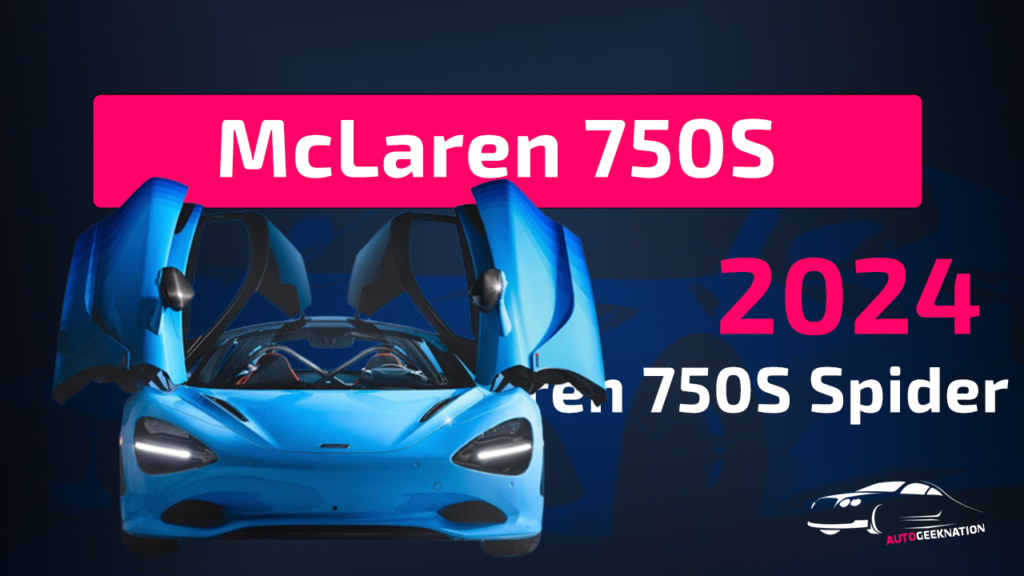
The McLaren 750S Spectrum Theme is a good example of how far modern supercar personalization can go when paintwork becomes part of the engineering and design process.
Created by McLaren Special Operations (MSO), the Spectrum Theme was introduced exclusively for the 750S and uses a seven-tone paint treatment rather than a conventional single-color finish or simple two-color gradient. The closely spaced tonal transitions are designed to follow the complex surfaces of the 750S body, creating an effect that appears to change as the car is viewed from different angles.
But the Spectrum Theme is more than an elaborate paint job. Producing the effect required MSO to develop new paint techniques and individually formulated color mixes for different sections of the car.
And underneath that bespoke finish is the same mechanical package that makes the 750S one of McLaren’s most focused series-production supercars: a 4.0-liter twin-turbocharged V8 producing 750 PS and 800 Nm.
What Is the McLaren 750S Spectrum Theme?
The Spectrum Theme is a bespoke exterior finish developed by McLaren Special Operations, McLaren’s in-house personalization division.
Unlike a conventional color that remains largely consistent across a body panel, Spectrum uses a sequence of closely related tones to create a gradual visual transition. McLaren developed the launch version with seven paint tones, requiring specially formulated colors and carefully controlled application techniques.
The idea builds on the earlier Velocity Theme developed for the McLaren 720S. However, Spectrum takes the concept further by using seven tonal transitions across the body rather than the simpler two-paint fade associated with Velocity.
The result is deliberately subtle from a distance but much more complex when viewed closely.
Three Launch Color Themes
MSO initially developed the Spectrum Theme in three main colorways:
- Spectrum Blue
- Spectrum Orange
- Spectrum Grey
These aren’t simply three standard colors applied differently. Each theme uses its own sequence of tones and transitions.
The blue version moves from Spectrum Blue to Metallic Aurora Blue, while the orange treatment transitions from Spectrum Orange to Gamma Red Metallic. The grey version moves from Spectrum Grey to Metallic Meteorite Grey.
MSO also made it possible to develop unique Spectrum colorways for individual customers, meaning the three launch versions were not necessarily the limit of the program.
That is an important distinction: Spectrum is not a fixed factory color in the conventional sense. It is a bespoke paint process.
Why the Paint Is So Difficult to Produce
The 750S has a complicated body shape, particularly around its dihedral doors and aerodynamic surfaces.
A normal paint scheme can be designed around relatively simple panel boundaries. Spectrum is different because its tonal lines need to follow the sculpture of the body while remaining visually coherent across gaps, shut lines and changing surfaces.
MSO technicians therefore had to carefully position the Spectrum transitions around the door architecture and aerodynamic contours. McLaren described the process as requiring a high level of attention and accuracy to ensure the painted lines work with the shape of the car.
The complexity is part of what makes the finish interesting.
The colors are not arranged randomly. They are positioned so the visual movement of the paint complements the lines of the 750S.
The Seven-Tone Effect
The defining characteristic of Spectrum is the use of closely grouped shades.
Viewed normally, the individual tones can visually blend into a continuous transition. At the same time, the differences between adjacent colors create a subtle light-to-dark effect within the bands.
McLaren says this produces an impression of speed and acceleration even when the car is stationary.
That claim is better understood as a design effect rather than a physical performance benefit.
The paint does not make the 750S faster. Instead, the visual transitions are designed to emphasize the car’s aerodynamic form and create a sense of movement.
This is particularly appropriate for the 750S because the body itself was developed around airflow, weight reduction and high-speed stability.
The Rear Uses a Different Kind of Fade
One of the most interesting details appears at the rear.
The seventh paint tone does not simply continue as another solid stripe. Instead, MSO uses a Velocity-inspired fade that wraps around the rear of the vehicle.
This gives the paint treatment a visual conclusion rather than simply stopping at a panel boundary.
The rear section therefore becomes darker and more unified as the Spectrum transitions toward the tail.
Even the active rear wing can receive a contrasting color on its underside, providing another opportunity to connect the paint theme with the car’s aerodynamic hardware.
The 750S Beneath the Paint
It would be easy to focus entirely on the Spectrum finish and forget that the 750S is a serious performance machine underneath it.
The car is powered by a 4.0-liter twin-turbocharged V8 mounted behind the cabin. McLaren quotes 750 PS (740 bhp) and 800 Nm of torque, sent through a seven-speed seamless-shift gearbox.
McLaren lists a 0–62 mph time of 2.8 seconds and a top speed of 206 mph (332 km/h) for the 750S.
The car also uses a carbon-fiber Monocage II structure, adaptive dampers with Proactive Chassis Control III and carbon-ceramic braking hardware. McLaren’s lightest published dry weight is 1,277 kg.
These specifications put the Spectrum Theme into context. The paint is a highly personalized visual treatment applied to a supercar whose design already has a strong technical purpose.
750S vs. 720S: What Changed?
The 750S replaced the 720S, but McLaren’s approach was evolutionary rather than a completely new vehicle architecture.
McLaren says the 750S gained 30 horsepower, 30 Nm of torque and a 30 kg reduction in overall weight compared with the 720S. It also received a wider front track, revised dampers, a quicker steering rack and a shorter final-drive ratio.
That means the 750S is not simply a 720S wearing a new badge.
The changes target response and driver engagement as much as outright acceleration. The result is intended to make the car feel sharper while retaining the usability McLaren emphasizes for road driving.
The Spectrum Theme complements that philosophy by adding an equally detailed approach to the car’s appearance.
750S Coupe and Spider
The Spectrum concept was introduced around the 750S family, which McLaren launched in both Coupe and Spider forms.
The Spider uses a retractable hardtop while retaining the same basic 4.0-liter twin-turbocharged V8 producing 750 PS and 800 Nm. McLaren quotes a 0–62 mph time of 2.8 seconds and a 206-mph top speed for the Spider as well, although its 0–124 mph time is listed at 7.3 seconds compared with 7.2 seconds for the Coupe.
This gives buyers a choice between the more enclosed Coupe experience and the additional sensory appeal of an open-top supercar.
Personalization Goes Beyond the Exterior
Spectrum was designed as part of the broader MSO personalization program rather than as an isolated paint option.
Customers could combine the exterior treatment with additional bespoke elements, including brightly colored leather trim, personalized dedication plaques and extended visual-carbon door sills featuring hand-painted Spectrum-effect MSO logos.
This is where the distinction between a normal factory option and an MSO commission becomes important.
The objective is not simply to choose a color from a catalog. MSO can create a more coordinated specification in which the exterior paint, interior materials and small visual details share the same theme.
Is Every Spectrum 750S Exactly the Same?
No.
The three launch themes—Blue, Orange and Grey—provide recognizable starting points, but MSO stated that Spectrum could also be created in unique colorways.
Each color transition requires carefully formulated paint mixes, and there is no single universal formula that can simply be applied to every possible Spectrum combination.
That means two bespoke Spectrum cars can potentially share the same underlying concept while having different visual identities.
This is exactly the type of customization aimed at buyers for whom a standard production color is not enough.
Why the Spectrum Theme Matters
The significance of Spectrum is not that McLaren has discovered a faster way to paint a car.
It demonstrates how modern bespoke divisions are turning vehicle personalization into a technical discipline of its own.
The 750S already relies heavily on lightweight construction, aerodynamic shaping and precise chassis tuning. Spectrum applies a similar philosophy to the visual side of the car: the finish has to work with the geometry rather than simply cover it.
The paint therefore becomes part of the design language.
That makes the Spectrum Theme particularly interesting on the 750S. The car’s aggressive surfaces, dihedral doors and active aerodynamic elements provide a complex canvas, and MSO uses those surfaces to make the color transitions appear dynamic.
What the Spectrum Theme Does Not Change
It is also important not to overstate what the option actually does.
The Spectrum Theme does not increase the 750S’s horsepower, reduce its weight or improve its acceleration figures. Those characteristics come from the underlying 750S engineering.
It is a bespoke visual and craftsmanship package.
The performance remains that of the standard 750S specification unless other MSO or performance options are separately selected.
That distinction matters when discussing the car because the visual drama of Spectrum can easily overshadow the mechanical specification underneath it.
Final Verdict
The McLaren 750S Spectrum Theme shows how far bespoke automotive design can go when paintwork is treated as more than decoration.
Its seven-tone finish requires specially developed paint techniques, carefully formulated color mixes and precise application around the 750S’s complex bodywork. The three original themes—Blue, Orange and Grey—provide different interpretations of the same concept, while MSO can also create unique color combinations for individual customers.
What makes the idea particularly convincing is that the Spectrum design follows the car’s existing character rather than competing with it. The transitions emphasize the 750S’s sculpted surfaces and create a sense of movement even when the car is parked.
And underneath the artwork is a genuinely formidable machine: a 750-PS twin-turbo V8, carbon-fiber structure, active aerodynamics and a 206-mph top speed.
For most buyers, a standard 750S would already be an extraordinary supercar. The Spectrum Theme is aimed at a much narrower audience: customers who want the mechanical character of the 750S combined with a finish that is as individual as the car itself.
FAQ
What is the McLaren 750S Spectrum Theme?
The Spectrum Theme is a bespoke multi-tone paint finish developed by McLaren Special Operations (MSO) specifically for the 750S. It uses seven tonal paint transitions across the body.
How many colors does the Spectrum Theme use?
The Spectrum Theme uses seven paint tones in its full finish. MSO initially offered three main color themes: Spectrum Blue, Spectrum Orange and Spectrum Grey.
What colors are available for the 750S Spectrum Theme?
The original themes are Blue, Orange and Grey. MSO also stated that unique colorways could be developed as bespoke specifications.
Does Spectrum Theme make the McLaren 750S faster?
No. Spectrum is a bespoke paint and personalization treatment. The 750S’s performance comes from its 4.0-liter twin-turbo V8, lightweight carbon-fiber construction and chassis and aerodynamic technology.
How powerful is the McLaren 750S?
The 750S produces 750 PS (740 bhp) and 800 Nm of torque from its 4.0-liter twin-turbocharged V8.
How fast is the McLaren 750S?
McLaren quotes 0–62 mph in 2.8 seconds and a top speed of 206 mph (332 km/h) for the 750S.
Is the Spectrum Theme available on the 750S Spider?
McLaren launched the 750S as both a Coupe and Spider, and the Spectrum Theme was developed as a 750S bespoke option. Exact availability can depend on the MSO specification and market.
What makes the Spectrum paint difficult to create?
The paint transitions must follow the 750S’s complex bodywork, including its dihedral doors and aerodynamic surfaces. MSO developed specialized techniques and bespoke paint mixes to maintain consistent transitions across those shapes.
Sources
- McLaren — 750S
- McLaren — 750S & 750S Spider
- McLaren Special Operations — MSO
- McLaren — 750S Spider
- McLaren Special Operations — 750S Spectrum Theme technical material